Vibe Coding Is Here. Your IT Department Has Thoughts.
Andrej Karpathy gave it a name. The AI tools gave it teeth. And now thousands of non-developers are shipping real software by describing what they want in plain English. Here's what vibe coding actually is, where it genuinely works, and why smart businesses in Malaysia are already building frameworks around it.


Let me paint you a picture. It's a Tuesday. A product manager at a mid-sized logistics company in Shah Alam sits down at her laptop with a half-drunk kopi and a problem: her team is drowning in a spreadsheet that tracks 400 vendor contracts, and IT has her change request sitting in a queue somewhere between "Q3 priority" and "maybe never." So she does something she's never done before. She opens an AI coding assistant, describes the app she wants in plain English, and by 3pm — before her afternoon meeting — she has a working web app. No developers. No tickets. No 6-week sprint.
This is not a hypothetical. Variants of this story are happening thousands of times a day across every industry. And it has a name: vibe coding.
So What Actually Is Vibe Coding?
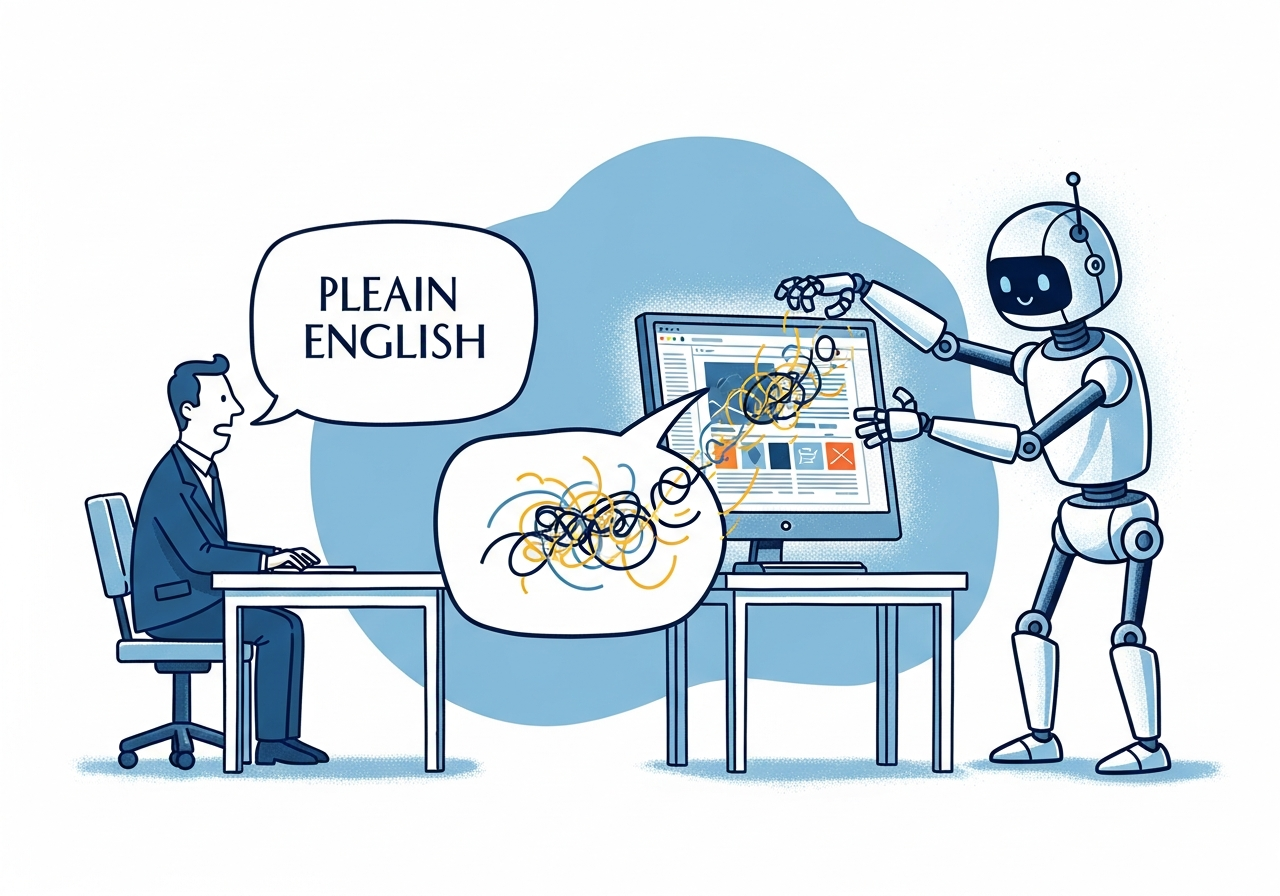
The term was coined in early 2025 by Andrej Karpathy — the former Tesla AI director and OpenAI co-founder — who described a new way of programming where you essentially vibe with an AI: you describe what you want, the AI writes the code, you look at the result and say "yes but the table should sort by date" and the AI fixes it. Repeat until done.
You're not writing code. You're not reading code. You're barely even thinking about code. You're just describing outcomes, and a very capable machine is translating that into working software. Karpathy put it bluntly: "The hottest new programming language is English."
And the tools have caught up to the hype. Platforms like Cursor, Bolt, Replit, and GitHub Copilot Workspace have made this accessible to anyone with a browser and a coherent sentence. The models powering them — GPT-5, Claude 3.7, Gemini 2.0 — are genuinely good at writing functional code from natural language. We're not talking about boilerplate snippets anymore. We're talking about full applications.
The Numbers That Should Make You Pay Attention
Here's what makes this more than a party trick:
- GitHub reported in late 2025 that over 40% of new code in repositories with Copilot enabled was AI-generated. That number will be higher by the time you read this.
- McKinsey's 2025 State of AI report found that software development tasks — writing first drafts of code, debugging, documentation — saw productivity gains of 20–50% with AI assistance across enterprise teams.
- The gap between idea and prototype has collapsed from weeks to hours for a growing category of business tools. Internal dashboards. Automation scripts. Data processing pipelines. CRUD apps. Report generators.
The pattern is consistent: for a defined category of software, vibe coding is real, it works, and it's dramatically faster than the traditional path.
The Reality Check (Because Someone Has To)
Here's where we pump the brakes slightly — not to rain on the parade, but because responsible AI adoption means knowing where the tool ends and the professional begins.
Vibe coding excels at:
- Internal tools and dashboards that don't face the public internet
- Proof-of-concepts and prototypes to validate ideas quickly
- Automation scripts — the kind that used to live in someone's head as "the thing Steve built years ago"
- Data transformation and reporting pipelines
- Single-purpose apps for small, known user groups
Where you still need a proper engineer:
- Anything handling payment data, personal health records, or identity credentials
- Systems that need to scale to thousands of concurrent users
- Complex integrations with legacy enterprise systems
- Long-term production software that teams will maintain for years
- Anything where a bug means regulatory consequences, not just an irritated user
The mental model that works: vibe coding is like a very talented intern who can build anything you describe — fast. But they have no professional judgement about what they shouldn't build without supervision. That judgement is still a human job.
What This Means for Malaysian Businesses

Malaysia has a well-documented tech talent shortage. MSC Malaysia status companies will tell you that finding experienced software developers — and keeping them — is one of the hardest operational challenges they face. Vibe coding doesn't solve that problem entirely, but it reshapes it in interesting ways.
For SMEs: The tools that were previously gated behind "you need to hire a developer" are increasingly within reach of a technically-minded operations person who's willing to learn the new workflows. A retailer in Petaling Jaya who needs a custom inventory tracker no longer has to choose between a RM50,000 custom build and a RM500/month SaaS that doesn't quite fit. There's a third option now.
For enterprises: The smart play is a structured "citizen developer" program — where business analysts, operations leads, and data people are trained to use vibe coding tools safely, within guardrails set by IT. This is already happening at major banks and telcos globally. It's not a free-for-all; it's a managed expansion of who gets to build.
For IT departments: The teams fighting this trend are going to lose. The teams that get ahead of it — by setting standards for what can be vibe-coded and what can't, by establishing security review processes for citizen-built tools, by choosing approved platforms — those teams are going to look very smart in 18 months.
The Three Kinds of People in Every Organisation Right Now
Based on what we're seeing across clients, every organisation has three camps forming around this:
The Enthusiasts — usually product people, ops leads, analysts — who have already built something with AI tools and are evangelising aggressively. They're right that the tools are powerful. They sometimes underestimate the risks.
The Sceptics — usually senior engineers and IT security — who have seen every technology trend overhyped and cleaned up the mess afterward. They're right to push back on governance gaps. They sometimes overcorrect toward blanket prohibition, which doesn't hold.
The Pragmatists — the rarest of the three — who are building frameworks: what tools are approved, what kinds of apps can be built without IT sign-off, what the security review process looks like for citizen-built software. These organisations move faster with less chaos.
The pragmatist camp is where the competitive advantage lives.
Where to Start
If you're a business leader reading this and thinking "we should probably have a position on this," here are three concrete starting points:
- Run a structured pilot. Pick 3–5 people from non-technical roles who have strong problem-domain knowledge. Give them access to a vibe coding tool (Cursor, Bolt, or Replit work well). Give them 4 weeks and a list of internal pain points. See what they build. The results will tell you more than any vendor demo.
- Establish a "sandbox" environment. The reason IT departments lose sleep over citizen development isn't the code — it's where it connects. An isolated sandbox environment with dummy data, approved APIs, and no production access gives people room to experiment without risk.
- Define the boundary clearly. Not "you can't build things without IT." That's unenforceable and demoralising. Instead: "Here's the category of tools you can build independently, here's what needs a review, and here's what's off-limits." Clarity beats prohibition every time.
The organisations that will win the next five years aren't necessarily the ones with the most AI experts. They're the ones that figured out how to safely put powerful AI tools in the hands of the most people. Vibe coding is one of the clearest paths to doing that.
And yes, your IT department will have trust issues along the way. That's healthy. Just don't let it become a veto.
Applied AI works with Malaysian businesses to design and implement safe AI adoption strategies — including citizen developer programmes, AI governance frameworks, and bespoke tooling. If you're figuring out where to start, we're happy to have that conversation.
Find the signal in your operation.
Tell us what is slowing the business down. We will come back with a considered next step, not a generic deck.