GraphRAG: When Your AI Finally Stops Skimming and Actually Reads the Room
Simple RAG taught AI to find answers. GraphRAG teaches it to understand them. Here's why that difference is everything — and why it's quietly becoming the most important upgrade in enterprise AI.

Imagine hiring a research assistant who reads your entire company's document archive — every memo, every report, every email thread going back three years — and then, instead of just handing you the relevant page, actually tells you why a decision was made. That's not magic. That's GraphRAG.
First, a Quick Refresher on the "Old" RAG
RAG — Retrieval-Augmented Generation — was a genuinely clever idea. Instead of forcing an AI to memorise everything (which is both expensive and unreliable), you give it a search engine. Ask it a question, it finds the most relevant text chunks from your documents, and it uses those chunks to answer you. Smart, efficient, and it worked brilliantly.
Until it didn't.
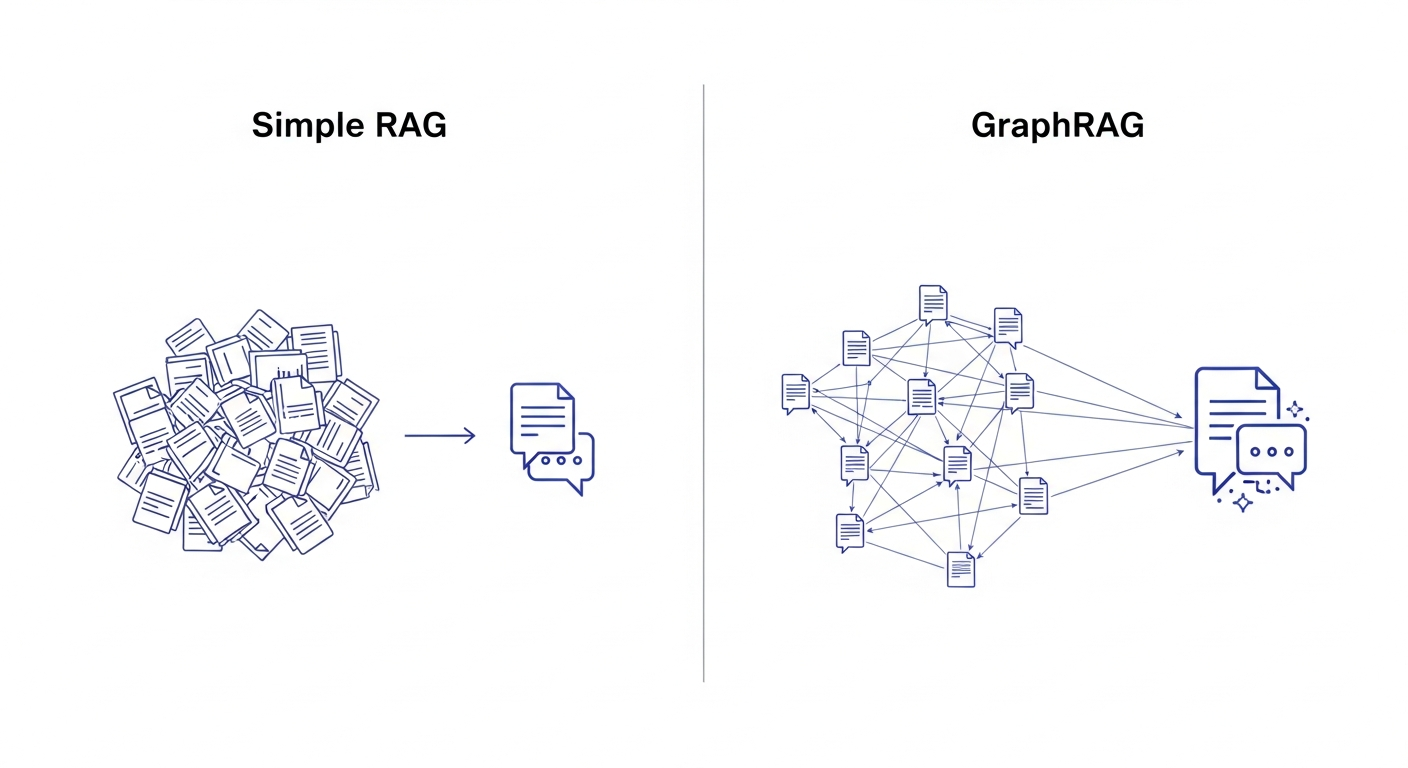
The problem with simple RAG is that it's essentially a very well-dressed keyword matcher. It finds the closest text to your question. But documents don't exist in isolation. Knowledge isn't a pile of sentences — it's a web of relationships.
Enter GraphRAG: The AI That Connects the Dots
GraphRAG doesn't just retrieve text. It builds a knowledge graph — a map of entities (people, projects, decisions, dates) and the relationships between them. Think of it like the difference between a phone book and a social network. One tells you where to find someone. The other tells you who they know, what they've worked on, and why they matter.
When you ask a GraphRAG-powered system a question, it doesn't just hand you the three most relevant paragraphs. It traverses the graph, understands context, and synthesises an answer that draws from connected knowledge across your entire data universe.
"Simple RAG is like Googling something. GraphRAG is like asking someone who's been at the company for twenty years."
A Real-World Example That Makes It Click
Let's say your company made a costly decision to switch logistics vendors in 2022. Two years later, a new procurement manager wants to understand: why did we make that call?
Simple RAG will find you the announcement email or maybe the contract. It answers "what happened."
GraphRAG will connect the dots: the board meeting notes from Q1 2022, the supplier performance report that flagged delays, the internal risk memo, and the stakeholder conversation that tipped the final decision. It answers "why it happened" — because it understands that all those documents are part of the same story.
Why This Matters Right Now
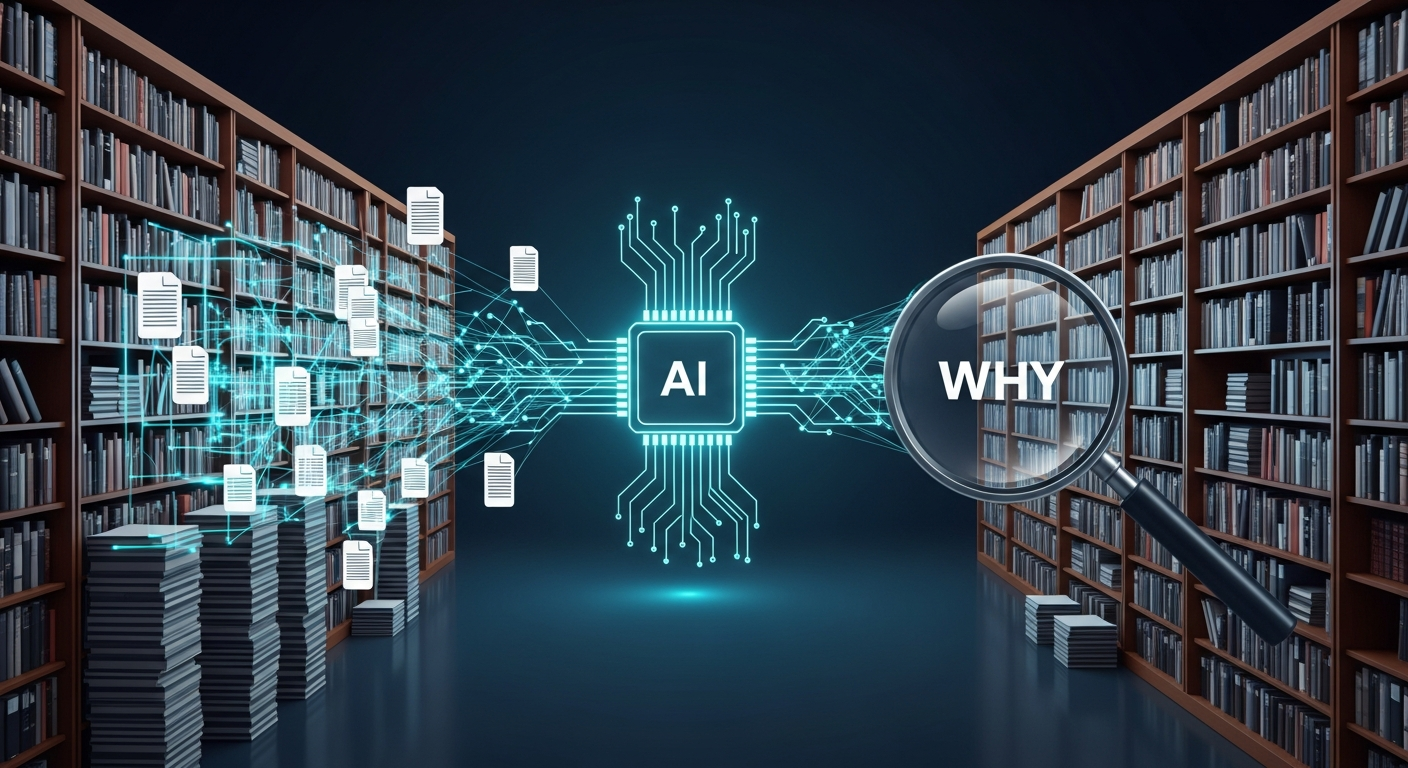
Large organisations are sitting on vast libraries of institutional knowledge — contracts, board papers, compliance records, research reports — most of it locked away in formats that AI couldn't meaningfully navigate until now.
GraphRAG is solving what many are calling the "enterprise memory" problem. Here's what that unlocks:
- Regulatory Compliance: Instantly understand the history and rationale behind any policy or audit decision.
- Legal & Corporate Governance: AI that can reason across years of contracts, resolutions, and correspondence — not just retrieve a clause.
- Customer Intelligence: Understand why a key account churned by connecting CRM notes, support tickets, and account history.
- Knowledge Retention: When your most experienced employee leaves, GraphRAG ensures their knowledge doesn't go with them.
The Honest Caveats (Because We Told You This Would Be Smart)
GraphRAG isn't a magic wand. Building and maintaining a knowledge graph requires upfront investment — you need to extract entities, define relationship types, and keep the graph updated as data changes. For small, simple document sets, a well-tuned traditional RAG pipeline is often still the right answer.
But for organisations dealing with complex, interrelated data at scale? GraphRAG is rapidly becoming the default choice. Microsoft open-sourced their GraphRAG implementation in mid-2024, and adoption has been accelerating ever since.
What This Means for Malaysian Businesses
Malaysia's corporate landscape — with its complex regulatory environment, multi-jurisdictional operations, and Bahasa/English bilingual document libraries — is exactly the kind of environment where GraphRAG shines. Corporate secretaries, legal firms, financial institutions, and government agencies all sit on rich, interconnected document ecosystems that have historically been nearly impossible to query intelligently.
The technology that was once only accessible to tech giants is now within reach. The question isn't whether your organisation will adopt this — it's whether you'll be ahead of the curve or playing catch-up.
The Bottom Line
Simple RAG was a great first step — AI that could find knowledge. GraphRAG is the evolution — AI that can understand it. If your enterprise AI strategy still relies purely on keyword retrieval, you're building on foundations that are already showing their age. The good news? The upgrade path is clearer than ever.
Applied AI helps Malaysian businesses implement modern AI architectures including GraphRAG pipelines tailored to local regulatory and document environments. Get in touch to learn what's possible for your organisation.
Find the signal in your operation.
Tell us what is slowing the business down. We will come back with a considered next step, not a generic deck.