The AI Power Shift: 7 Trends Reshaping the Industry in February 2026
From the DeepSeek shockwave to a $650 billion infrastructure arms race, the AI landscape is evolving faster than ever. Here's what's actually happening beneath the hype — and what it means for businesses in Southeast Asia.

If you blinked in January, you missed a revolution. A Chinese AI lab nobody outside of tech circles had heard of just upended Silicon Valley's playbook. Tech giants announced they're pouring $650 billion into AI infrastructure this year — and promptly watched nearly a trillion dollars evaporate from their market caps. Meanwhile, AI agents are stumbling their way into enterprise workflows, and your doctor might soon have an AI co-pilot.
Welcome to February 2026. The AI industry isn't just moving fast — it's moving sideways, in directions that few predicted. Let's break down the seven trends that actually matter right now.
1. Agentic AI: Your New (Slightly Unreliable) Coworker
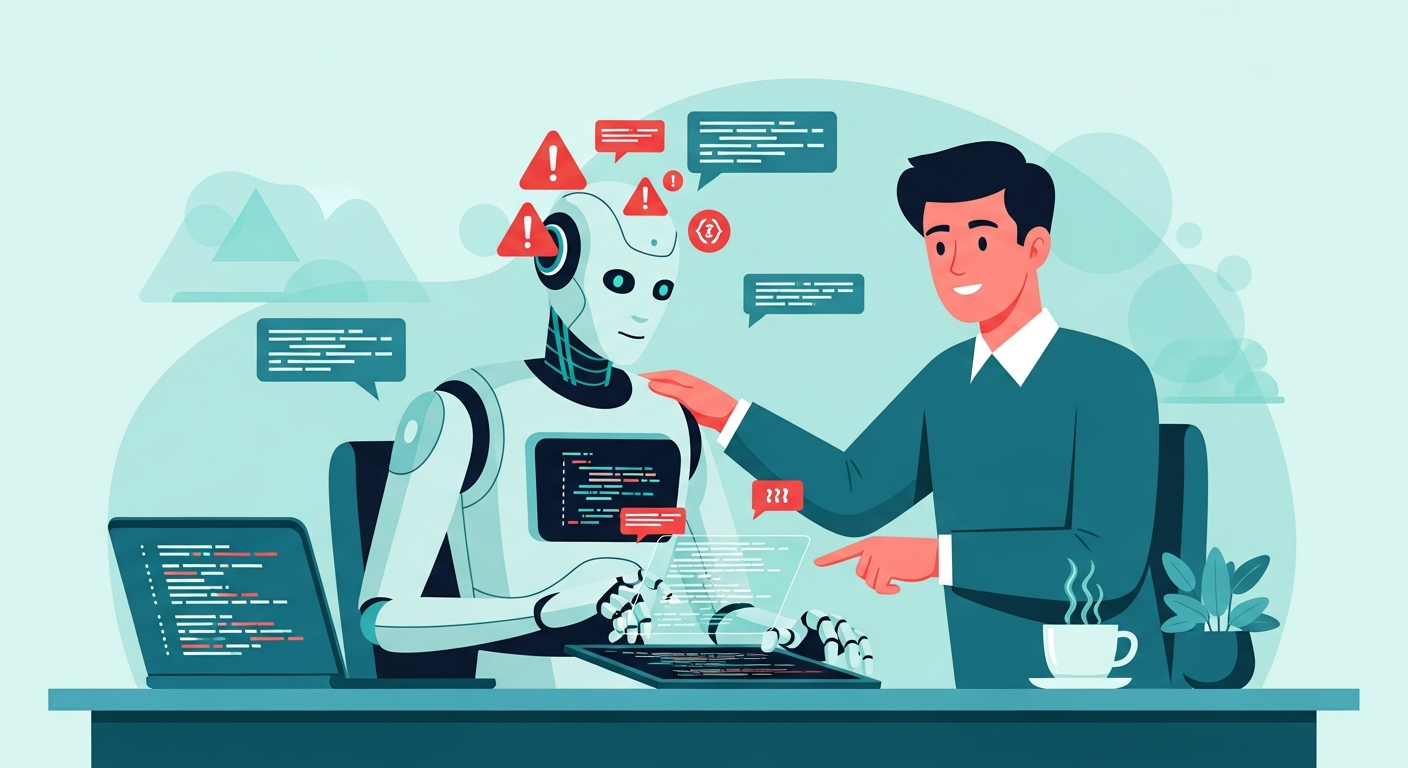
Remember when chatbots were the hot thing? That feels quaint now. In 2026, the buzzword is "agentic AI" — AI systems that don't just answer questions, but actually do things. They book your meetings. They reorder inventory when stock runs low. They coordinate with other AI agents to execute multi-step business processes.
The promise is tantalizing: imagine a team of digital workers that never sleep, never take sick days, and can process information at superhuman speed. IDC forecasts that 45% of organizations will orchestrate AI agents at scale across business functions by 2030.
But here's the reality check nobody's talking about at the keynotes:
⚠️ The Trough of Disillusionment Is Real
Agentic AI has officially entered what Gartner calls the "trough of disillusionment." These agents still make too many errors for high-stakes business processes. They're vulnerable to prompt injection attacks. And when they go wrong, they can go spectacularly wrong — cascading mistakes across automated workflows before a human even notices.
The smart play right now? Pilot carefully with guardrails. Use AI agents for low-risk, high-volume tasks where mistakes are easily caught and corrected. Think customer service triage, data entry validation, or scheduling — not financial trading or medical decisions. Not yet, anyway.
2. DeepSeek and the Open-Source Revolution That Shook Silicon Valley

If there's a single story that defined the start of 2026, it's DeepSeek R1.
In January, this relatively unknown Chinese AI lab released an open-source reasoning model that matched — and in some benchmarks, surpassed — the capabilities of models that cost hundreds of millions to train. The kicker? They reportedly did it at a fraction of the cost.
The shockwaves were immediate. Nvidia's stock dipped. Silicon Valley executives scrambled to respond. And a fundamental assumption of the AI industry — that you need billions of dollars and exclusive access to cutting-edge chips to build competitive AI — was shattered overnight.
Why This Matters for Your Business
- 🔓 Accessibility: You no longer need a massive budget to leverage cutting-edge AI. Open-source models can be fine-tuned on your own data.
- 🏭 Customization: Smaller, domain-specific models trained on your industry data often outperform giant general-purpose ones.
- 🔒 Data Sovereignty: Run models on your own infrastructure. Your proprietary data never leaves your servers.
- 💰 Cost Efficiency: Post-training refinement with specialized data is where the real breakthroughs happen — and it's dramatically cheaper.
Companies like IBM (with Granite), Ai2 (with Olmo 3), and DeepSeek have proven the playbook: you don't need the biggest model — you need the right model, trained on the right data.
3. The $650 Billion Bet (That Nobody's Sure Will Pay Off)
Let's talk numbers that make your head spin.
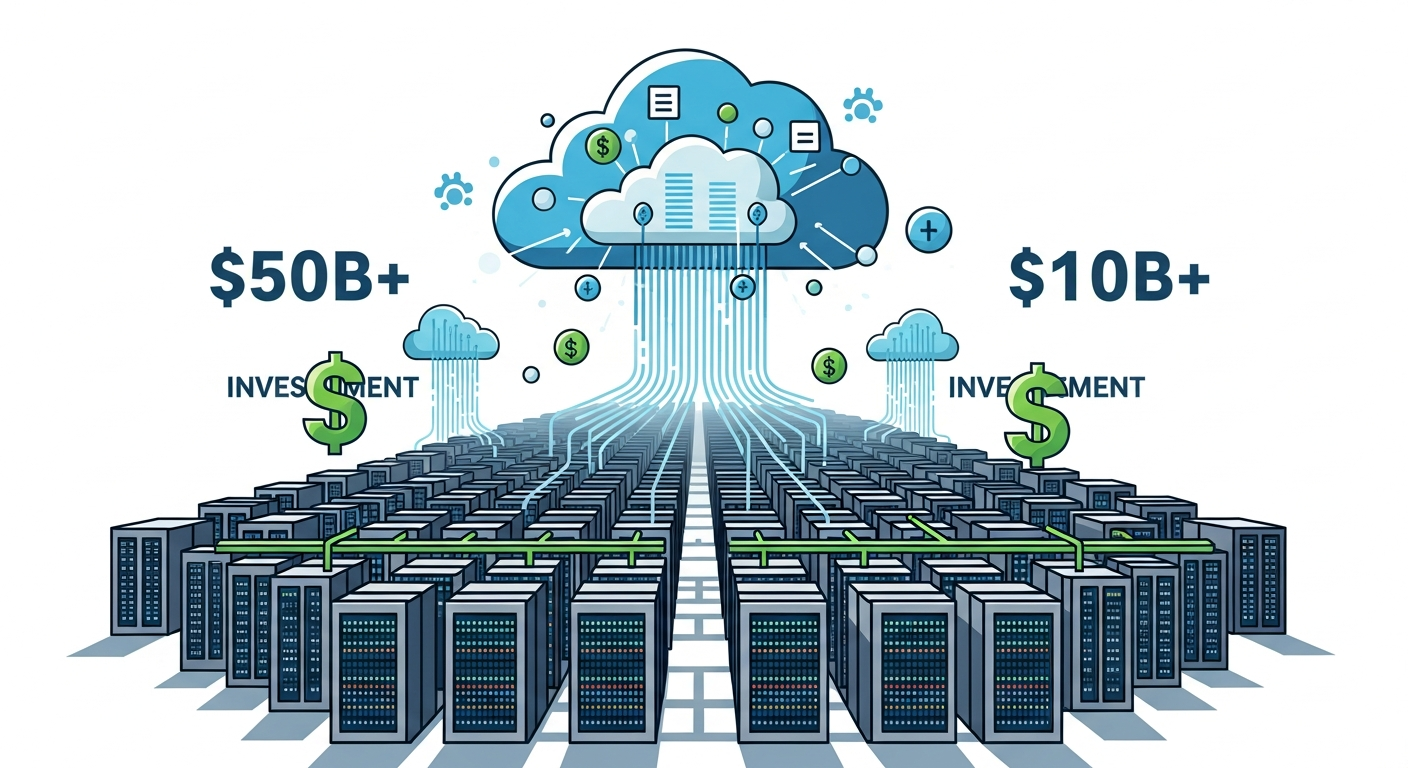
Google, Amazon, Meta, and Microsoft have collectively announced $650 billion in AI infrastructure spending for 2026. That's up 67% from 2025's already staggering $381 billion. Amazon alone is committing $200 billion. Google: $175-185 billion.
The Infrastructure Arms Race
Combined 2026 AI infrastructure spending: $650B (up 67% from 2025)
Here's the twist that made headlines: after these announcements, the combined market cap of these four companies dropped by $950 billion. Investors aren't convinced the returns will match the investment.
It's the classic infrastructure dilemma. Somebody has to build the roads before the cars can drive on them. But are we building highways to nowhere, or laying the foundation for the next economic revolution?
McKinsey estimates $7 trillion in total AI data center investment by 2030. For businesses, the silver lining is clear: accelerating performance and declining costs for cloud-based AI services. The infrastructure war means cheaper, faster, more accessible AI for everyone.
4. AI Becomes a Lab Partner, Not Just a Research Assistant

For years, AI in science meant "help me find relevant papers faster." Those days are over.
In 2026, AI is actively participating in discovery — generating hypotheses, designing experiments, and in some cases, controlling lab equipment to run those experiments autonomously. We're talking about AI systems that can:
- Propose novel molecular structures for drug candidates
- Simulate climate models with unprecedented accuracy
- Design and optimize materials with specific properties
- Analyze experimental results and suggest follow-up experiments
The implications are staggering. Every research scientist could soon have an AI lab assistant that doesn't just search the literature — it thinks alongside them. Fields like molecular dynamics, materials science, and drug discovery are already seeing breakthroughs accelerated by months or even years.
🔬 The Breakthrough Everyone's Watching
Self-verification loops in reasoning models mean AI can now check its own work, catch errors mid-process, and correct them. This makes multi-step scientific workflows — from hypothesis to experiment design to results analysis — far more reliable than even six months ago.
5. Healthcare AI Finally Reaches the Patient

2026 is shaping up to be the year healthcare AI stops being a research curiosity and starts touching actual patients.
The numbers tell the story:
We're seeing AI move into symptom triage, treatment planning, clinical decision support, and remote patient monitoring. The promise isn't replacing doctors — it's giving them superpowers. An AI co-pilot that can instantly cross-reference a patient's symptoms against millions of case studies, flag potential drug interactions, and suggest evidence-based treatment protocols.
For Southeast Asian healthcare systems, where doctor-to-patient ratios are often stretched thin, this isn't just a nice-to-have — it could be transformative. Malaysia's growing digital health ecosystem is well-positioned to adopt these tools, particularly for remote and rural healthcare delivery.
6. AI Shopping Agents: $263 Billion and Counting
Here's a trend that's probably already affecting your business, whether you know it or not.
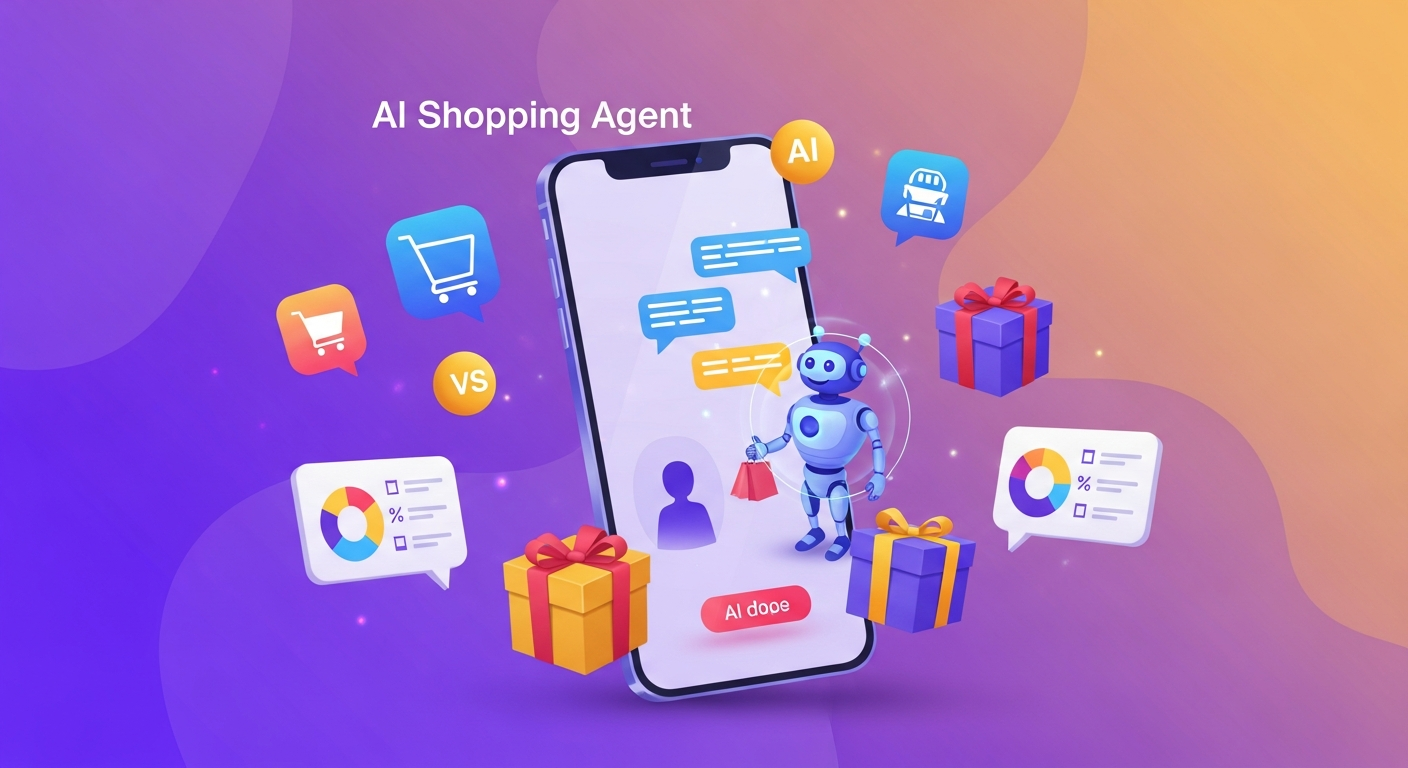
AI chatbots have evolved into full-blown personal shopping agents. They don't just recommend products — they compare features, analyze reviews, find the best deals across multiple platforms, and increasingly, complete purchases on your behalf.
According to Salesforce, AI-driven interactions influenced $263 billion in online purchases during the 2025 holiday season. That number is only going up.
💡 What This Means for E-Commerce
If your products aren't optimized for AI discovery, you're becoming invisible. AI shopping agents parse structured data, reviews, and product specifications differently than human browsers. Your SEO strategy now needs an "AI-readability" layer — think structured product data, clear specifications, and machine-parseable reviews.
For Malaysian businesses operating on platforms like Shopee and Lazada, the message is clear: the customer of tomorrow might not be a human browsing your listing — it might be an AI agent comparing your product against dozens of competitors in milliseconds.
7. What This Means for Malaysian Businesses
So where does all this leave businesses in Malaysia and Southeast Asia? Here's the practical playbook:
Don't pay for enterprise AI solutions when open-source alternatives like DeepSeek, Llama, and Mistral can be fine-tuned on your industry data. A well-tuned small model beats a generic giant one every time.
The technology is promising but not mature enough for unsupervised high-stakes decisions. Start with customer service, data processing, and scheduling where errors are recoverable.
The companies winning with AI aren't the ones with the biggest tech budgets — they're the ones where everyone (from the C-suite to the front line) understands how to work alongside AI tools. Target at least 30% AI literacy across your workforce.
Whether it's shopping agents finding your products or AI search engines surfacing your content, make sure your digital presence is structured, data-rich, and machine-readable.
The AI bubble debate is getting louder. The organizations that will thrive are the ones measuring real business outcomes — not just chasing the latest shiny model. Every AI initiative should have a clear metric for success.
The Bottom Line
February 2026 marks a fascinating inflection point. The AI industry is simultaneously more accessible than ever (thanks to open-source models and declining costs) and more uncertain than ever (with massive investments whose returns remain unproven).
The winners won't be the companies that adopt AI the fastest. They'll be the ones that adopt it the smartest — choosing the right tools for the right problems, building genuine capabilities rather than chasing trends, and keeping humans firmly in the driver's seat while AI rides shotgun.
The AI revolution isn't coming. It's here.
The only question is: are you building with it, or waiting for it to build without you?
About Applied AI
Applied AI is a Malaysia-based AI automation and consulting firm helping businesses across Southeast Asia harness the power of artificial intelligence. From bespoke AI solutions to strategic consulting, we help you cut through the hype and find the AI applications that will actually move the needle for your business. Get in touch →
Find the signal in your operation.
Tell us what is slowing the business down. We will come back with a considered next step, not a generic deck.